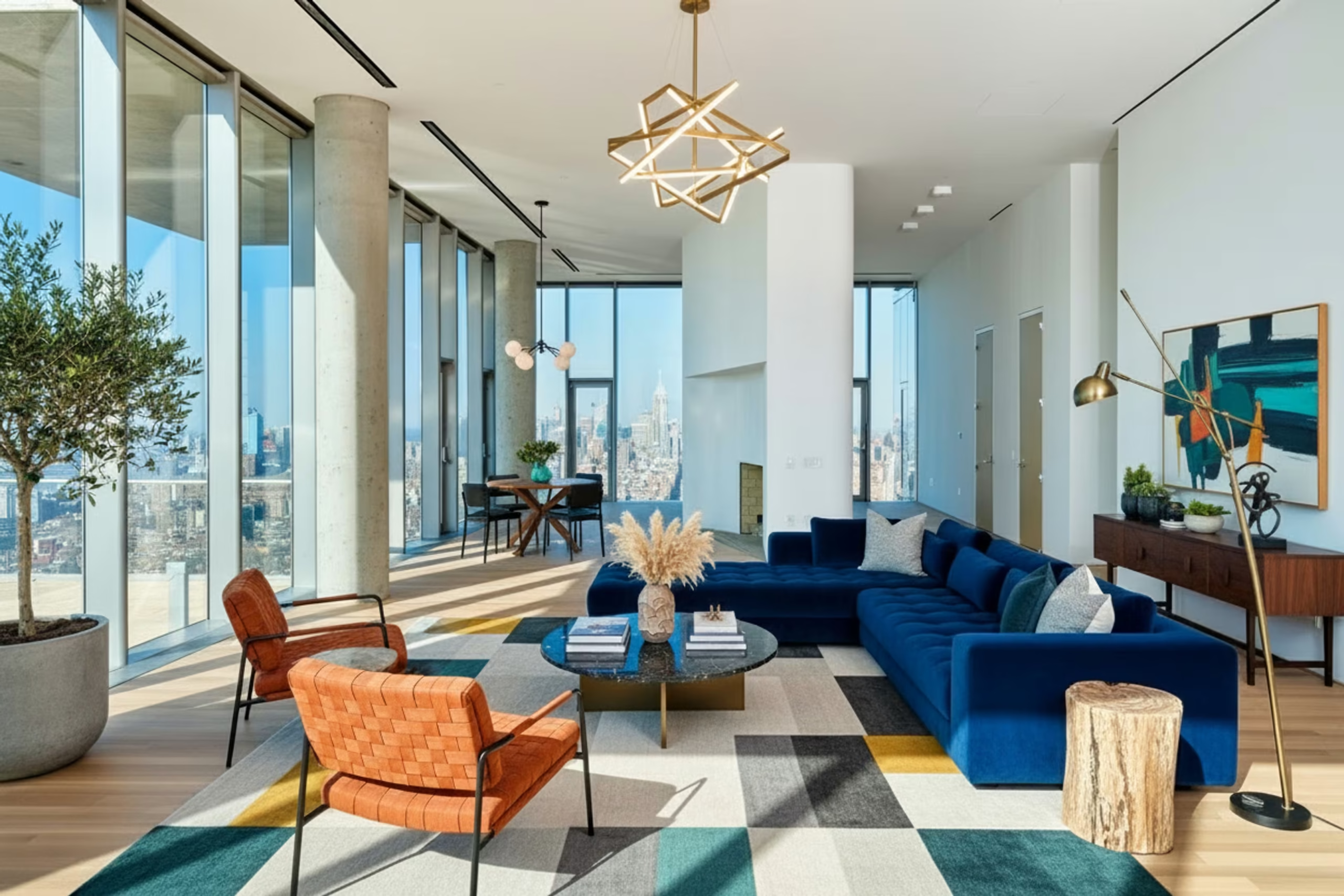
In 2025, the real estate industry has undergone a major shift as buyers begin—and often end—their home search online. Listing photos now serve as a property’s front door and first impression. For realtors, relying solely on traditional home staging is increasingly a disadvantage. AI-powered virtual staging has evolved from a novel tool to a competitive necessity in real estate marketing.
Major platforms like Zillow have embraced this trend, embedding AI virtual staging directly into their platforms. Zillow’s “Showcase + Virtual Staging” feature boosts engagement, listing views, and buyer intent substantially, signaling a future where AI staging is a baseline expectation rather than an optional extra.
What AI Virtual Staging Brings to Real Estate Marketing
Lightning Speed and Scalability
Traditional staging requires moving furniture, scheduling, and complex coordination, often taking days or weeks. AI staging delivers fully staged, photorealistic images in seconds, allowing agents to test multiple styles and adjust designs instantly to fit buyer preferences.
Cost Efficiency: Lowering Expenses Dramatically
Physical staging costs—furniture rental, transport, labor—quickly eat into margins. AI staging reduces these costs by up to 90–97%, making it affordable even for high-volume realtors and enhancing return on investment.
Flexibility and Easy Revisions
Unlike older forms of virtual staging that made revisions costly and cumbersome, AI platforms allow multi-turn edits like changing furniture, lighting, or wall colors at minimal extra cost—helping listings look perfect before going live.
Improved Buyer Engagement and Visualization
Buyers struggle to imagine empty rooms as homes. AI-staged photos bridge this gap by providing realistic, decorated spaces that encourage more clicks, tour requests, and buyer interest. Listings with compelling visuals reduce buyer hesitation.
Diverse Styling Options
Modern AI staging tools offer multiple design themes (modern, Scandinavian, farmhouse, coastal, industrial) with one click, enabling realtors to tailor appearances to different buyer demographics and local tastes efficiently.
Competitive Differentiation in the Market
As AI staging adoption rises, listing quality becomes a minimum standard. Realtors using AI early position themselves as technologically advanced, delivering polished marketing that leads to faster sales and higher client satisfaction.
Common Realtor Concerns and Solutions
The Future Outlook: Why AI Staging Matters Through 2030
- Platform-led Staging: Zillow’s integration is a trendsetter—agents ignoring AI staging risk reduced listing visibility.
- Growth in AI Investment: The real estate sector’s AI tools are growing rapidly in usage and valuation, transforming marketing from listing to closing.
- All-in-One Platforms: Marketing tools combining virtual staging, buyer analytics, and lead generation will dominate. Disconnected staging tools risk obsolescence.
- Maintaining Margins: Intense competition pressures agents to stage affordably yet attractively to secure listings and sales. AI staging offers a critical cost advantage.
Action Plan for Top Realtors in 2025
- Pilot AI Staging on Select Listings: Test impact on leads, buyer engagement, and feedback before full adoption.
- Match Design Style to Market: Experiment with multiple styles and identify what resonates with local buyer demographics.
- Use Staging as a Selling Point: Show before-and-after visuals in listing presentations to demonstrate value-added marketing expertise.
- Combine AI with Human Expertise: Use AI for baseline staging; enhance standout properties with human-led customization for distinction.
- Measure Results: Track metrics like click-through rates, inquiry volume, offer prices, and days on market to quantify AI staging ROI.
Final Thought
In 2025, AI virtual staging is no longer an optional tool for ambitious realtors—it is table stakes. It empowers agents to compete visually and cost-effectively, scaling marketing without overspending. Realtors still relying on empty rooms or costly physical staging risk falling behind. The future of real estate marketing is digitally staged: faster, smarter, and more compelling. Embrace AI staging now to outshine the competition and close more deals.
Leave a Reply